
Page 2
Here are some pictures of the fossils found.
Rick Schrantz found these nice
Ectenocrinus
cups. (below)
He also found some enrolled Flexicalymene granulosa,
shown below to the right of the crinoid cups.

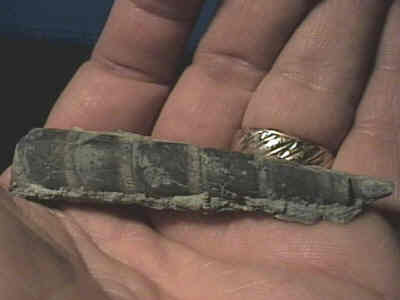
Bill Heimbrock found a very unusual Cephalopod. Notice the diagonal lines. At
first glance, they appear to run in a spiral like a snail shell, but on closer
examination, you can see that the lines run in the opposite direction on the
reverse side. This specimen is suspected to be the siphuncle of an Actinocerid.

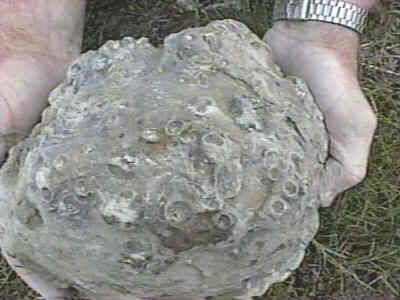
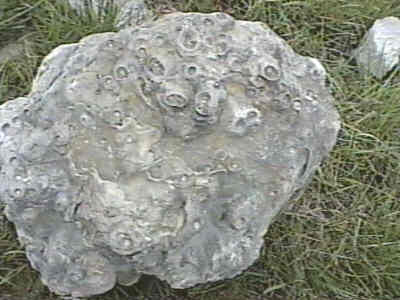
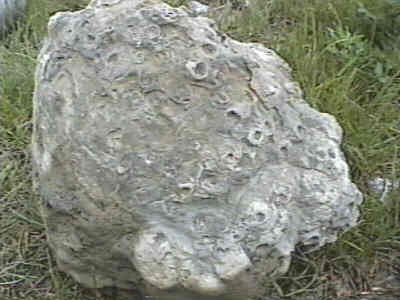
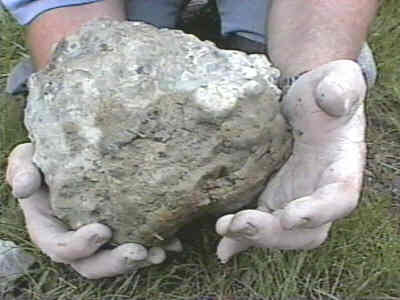
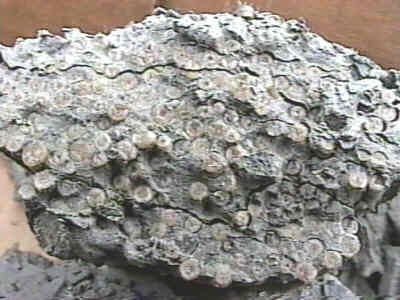
Ron Fine found this incredible bowling ball-sized bryozoan that is heavily
encrusted with layers of "volcano-style" crinoid
holdfasts on all sides. Many of the holdfasts are
encrusted with bryozoan indicating that the nodule had rolled over on the
Ordovician Ocean floor many times and was repopulated with crinoids and more
bryozoans. This is the largest such example anyone in the group had seen! It was
found sticking out of the hillside in situ.

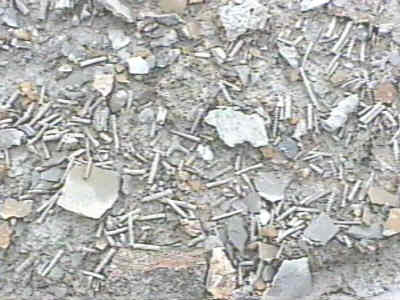
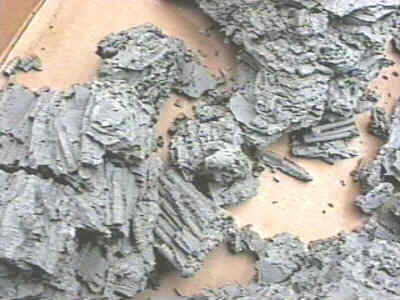
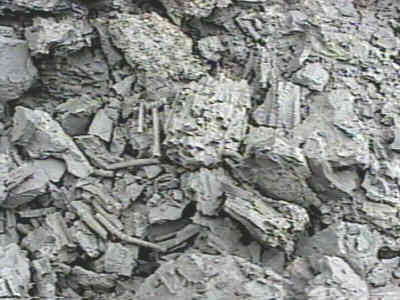
David Sligar found a patch of hundreds of crinoid stems that had some "log
jams" (shown below) associated with them. This was an indication that many
more crinoids lay just below the surface.

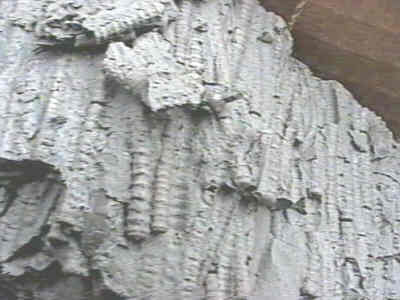
Dan Cooper then showed David Sligar and several others how to expose these
"log jam" layers using a hand trowel and a tire iron. Massive
quantities of stems were found along with a few crinoid cups. Here are some
pictures of what was uncovered.

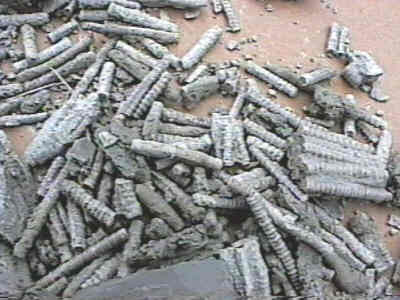
There is a crinoid cup (calyx) shown in the above picture at left. Can you see
it?



MORE PICTURES! Click Here to see pictures of how this crinoid excavation was done.
For more information on how to identify these fossils or for information on the Dry Dredgers, visit our Web site at http://drydredgers.org.
The Dry Dredgers and individual contributors reserve the rights to all information, images, and content presented here. Permission to reproduce in any fashion, must be requested in writing to admin@drydredgers.org.